Resting potential
The intracellular space is hyperpolarized, we have potential stored energy
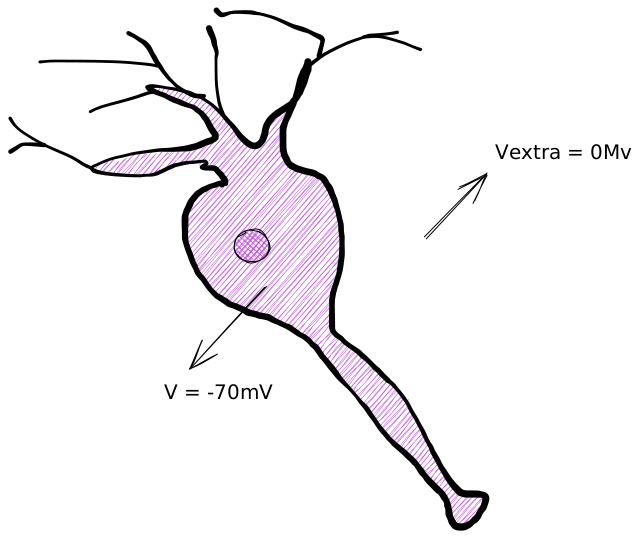
The three basic ingredients
- Cell membrane
- Concentration gradients (thanks to ionic pumps)
- Selective ionic channels
The most proeminent pump is the sodium-potasssium pump ($Na^+$/$K^+$) moving sodium from the inside to the outside, and potassium from the outside to the inside. $\rightarrow$ This process requires energy and sets up the concentration gradients.
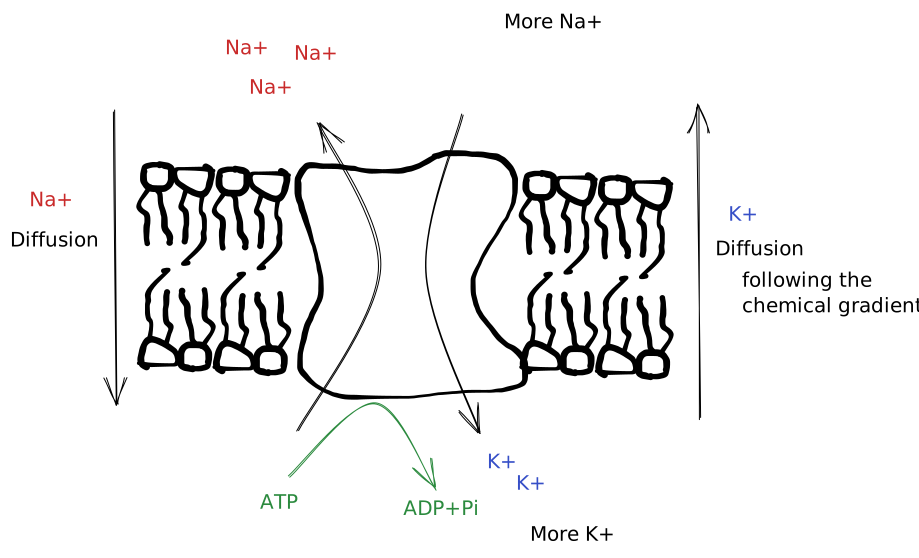
As $K^+$ is present at high concentrations on the inside it will diffuse to the outside. As a result the outside of the membrane accumulates a net positive charge (because of the slight excess of $K^+$) and the inside accumulates a net negative charge. Because opposite charges attract, the excess charges will align locally to each side of the membrane.
The cell membrane
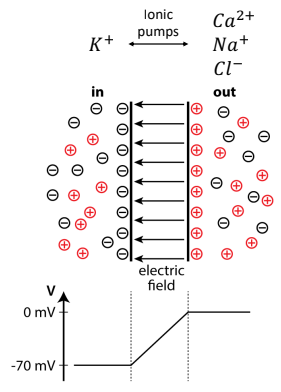
- Separates in vs. out
- Electrical insulator
- Electrical capacitor (stores charge)
Selective ionic channels
They have a large conductance $g_{channel}=10^4 g_{membrane}$ and are selective for one type of ion.
Computations in neurons
result from:
- Channel selectivity
- Time dependance of $g_{ch}$ due to:
- Neurotransmitters
- Voltage
- Secondary messengers ($Ca^{2+}$)
Ionic flux
The Nernst Equation
Goldman-Hodgkin-Katz equation
More realistic but more complex.

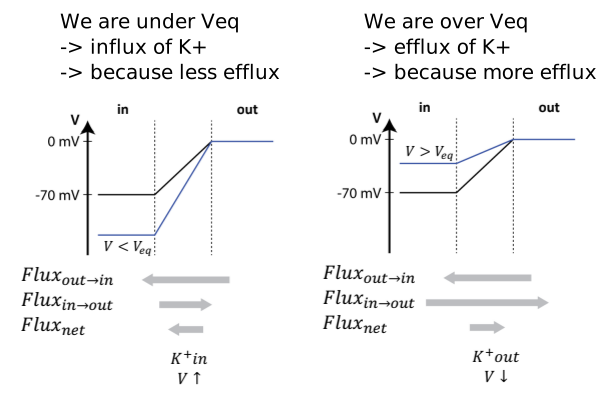
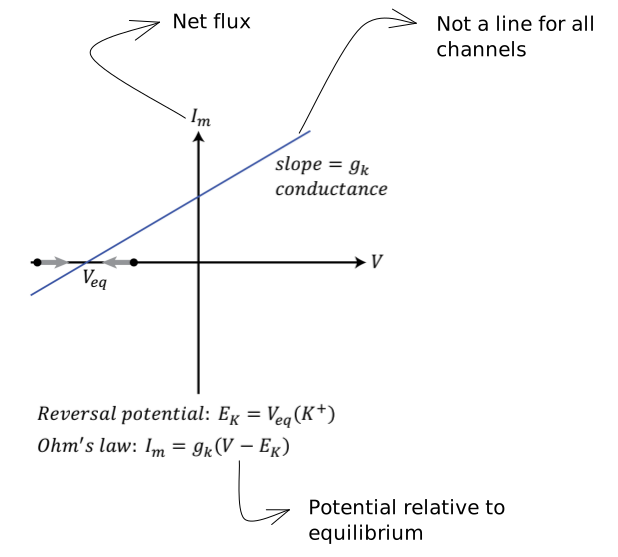
The reversal potential
(or also called the equilibrium potential for 1 ion)
It is the potential at which the flux is in equilibrium and will determine what will happen to the flux if we change the potential.
Example with $K^+$:
I-V curves
We can next graph an I-V (using ohm's law) curve for more insight into the system.
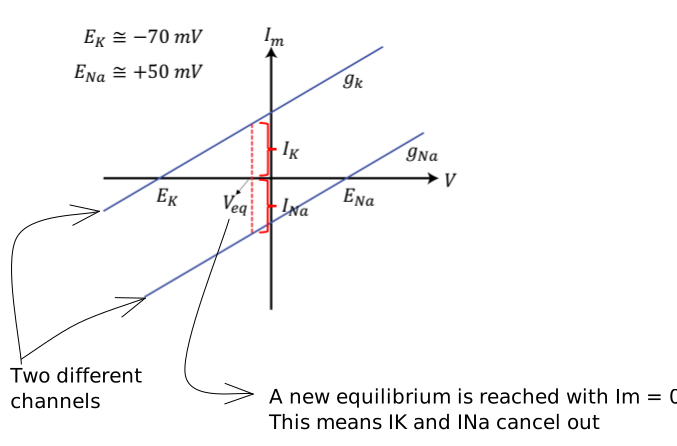
Two channel-types
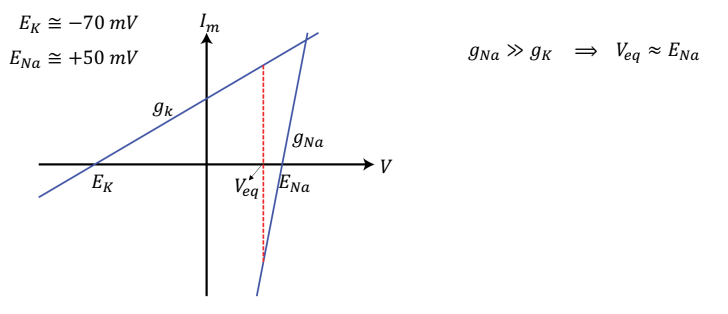
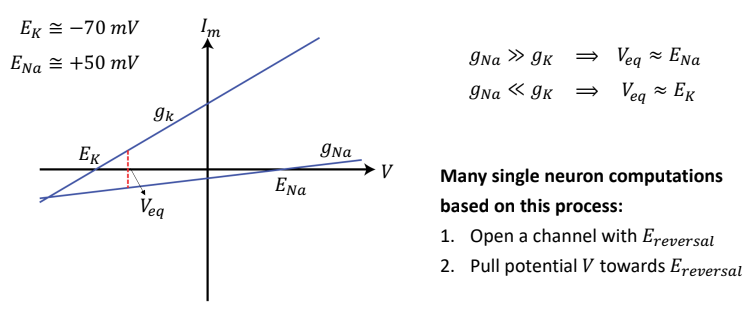
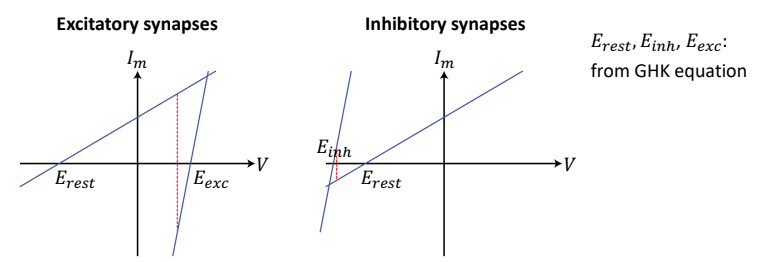
With two ions and respective channels, we obtain a new equilibrium potential. But the respective currents are not 0 and they cancel out. Therefore, the respective concentrations of the ions are not fixed requiring pumps to be maintained.