Follower integrator and differentiator
Integrators are a class of low pass circuits that filter out the high frequency components of the signal (often noise). Differentiators filter out the low frequency components of the input signal and respond well to its changes. Both are used to implement adaptation in neuromorphic systems. Adaptation is ubiquitous in neural systems and allows a system to optimize its dynamic range against the characteristics of the prevailing input signal.
Integrators (low pass filters)
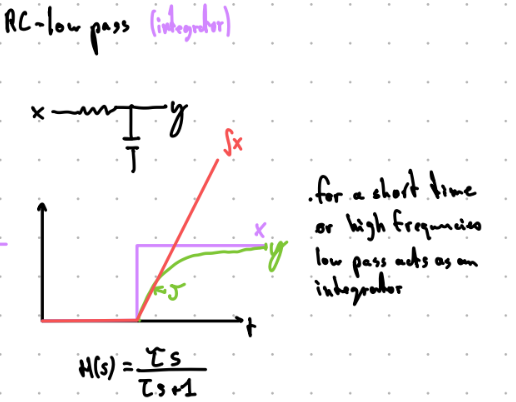
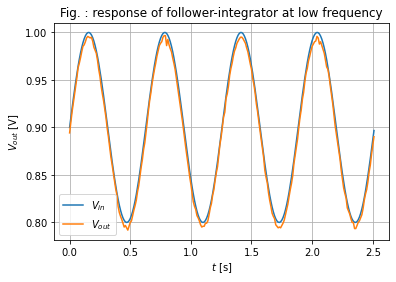
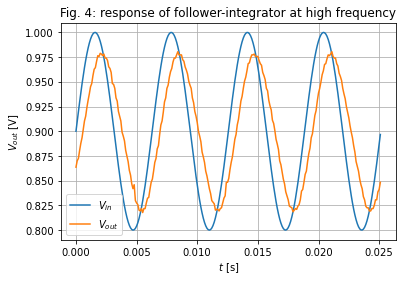
We can see below that for a short time and high frequencies, we get an integral like behaviour to a step response, but for long times, it just follows the input.
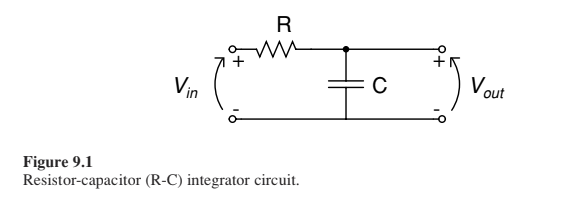
The classic follower integrator above, once made, cannot change its time constant. The transconductance amplifier below has an adjustable time constant (by setting $V_{b}$).
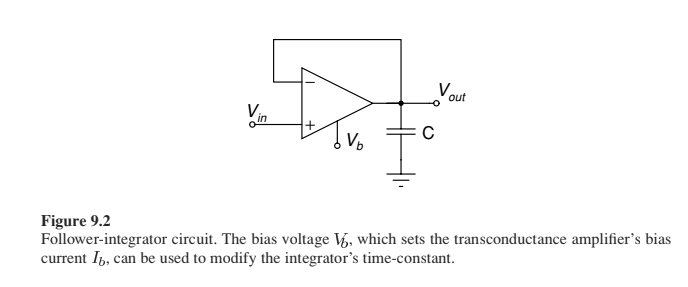
It is made up of a unity gain follower and a capacitor on the output node. From KCL we get:

In small signal regime the amplifier operates in it's linear range. So we get:
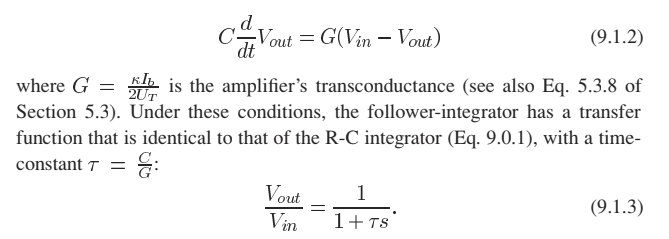
Often analyzed using Heaviside
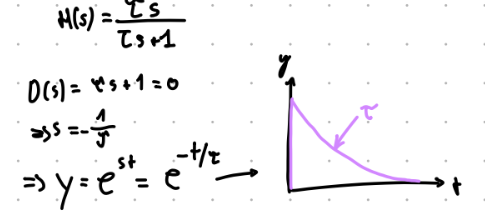
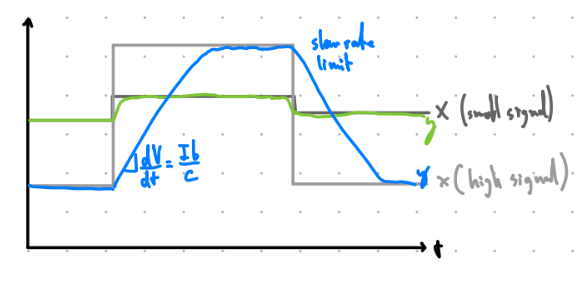
Small signal we see an exponential response (or a bigger one):
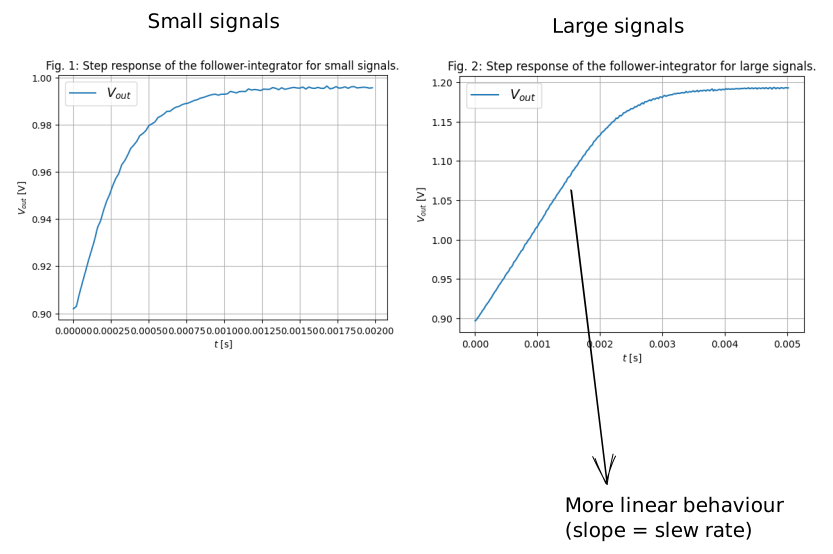
%%🖋 Edit in Excalidraw, and the dark exported image%%
Examples from the lab :
Differentiators (high pass filters)
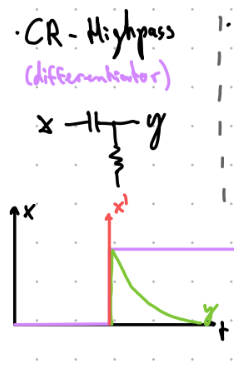
It acts as a differentiator for long times and low frequencies, for short times it just follows the input.
Bode plots
After analyzing in the s pane with Heaviside stuff, we can plot the response vs the frequencies:
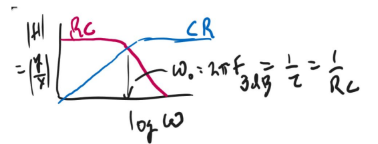
And we can see the filtering behaviour